



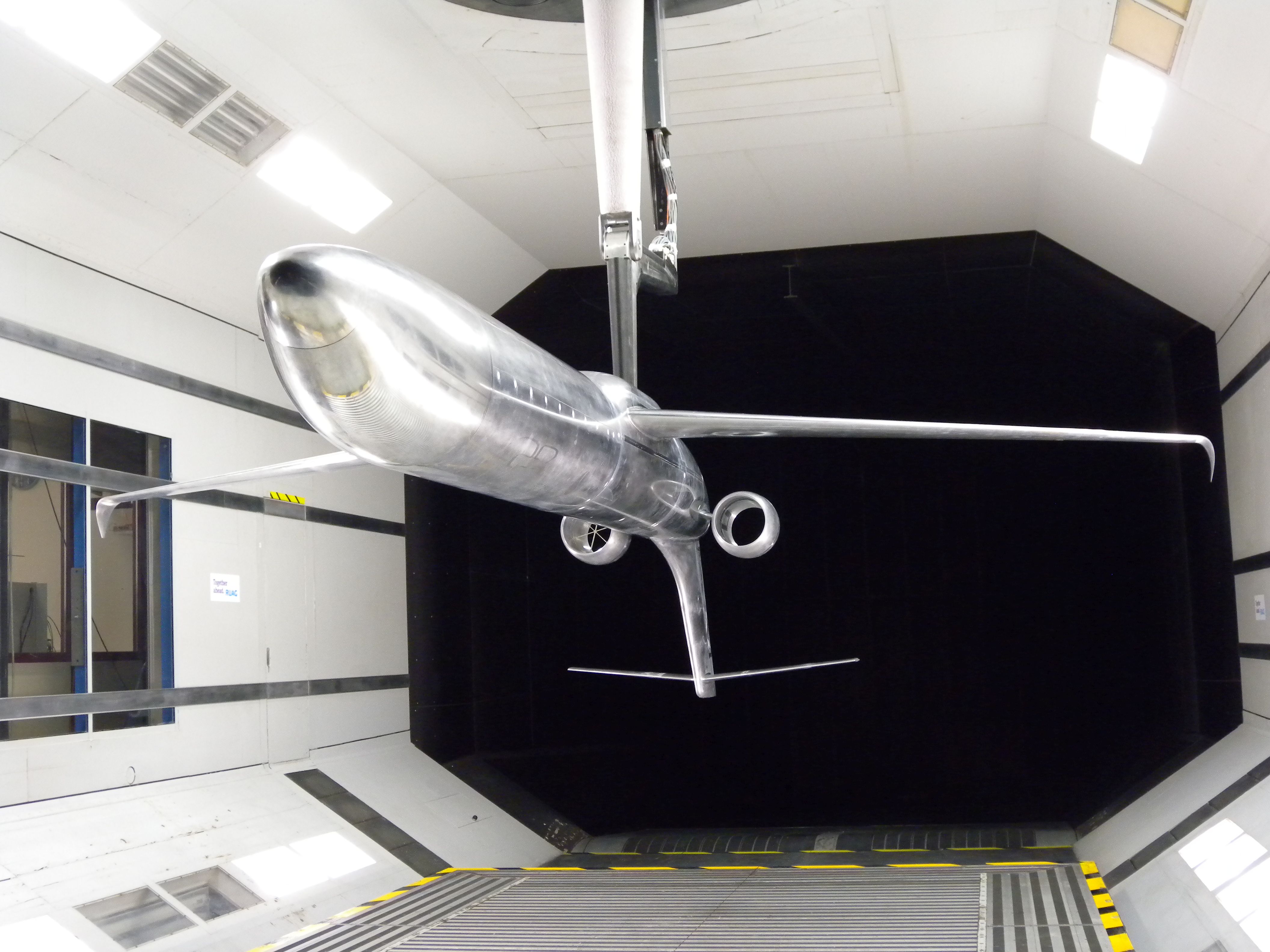
ESICAPIA – Enhanced Solutions for Innovative Configuration Aerodynamics of a Green Regional Aircraft
ESICAPIA performed aerodynamic and acoustic wind tunnel testing of a Green Regional Aircraft configuration with laminar-flow wings and rear-mounted engines. IBK led project management and model design.
Project Overview
ESICAPIA (Enhanced Solutions for Innovative Configuration Aerodynamics of a Green Regional Aircraft) was part of the EU Joint Technology Initiative – Clean Sky “Green Regional Aircraft” (GRA). The project aimed to achieve an aerodynamic characterization of a laminar-flow aircraft configuration equipped with rear-mounted turbofan engines, emphasizing innovative high-lift systems and their aerodynamic–acoustic interaction.
The program addressed one of the central challenges in next-generation regional aircraft design: improving aerodynamic efficiency and reducing environmental noise within the Clean Sky Green Regional Aircraft framework. The project combined large-scale experimental aerodynamics with realistic acoustic and mechanical modeling to provide a validated data set for future low-emission regional transport configurations.
A wind tunnel test campaign was carried out at the RUAG Large Wind Tunnel in Emmen (Switzerland), selected for its capability to accommodate the 4.9 m span model and deliver high Reynolds number conditions representative of flight. The tests covered both powered and unpowered configurations, enabling detailed measurement of aerodynamic loads and noise emissions under various operating scenarios.
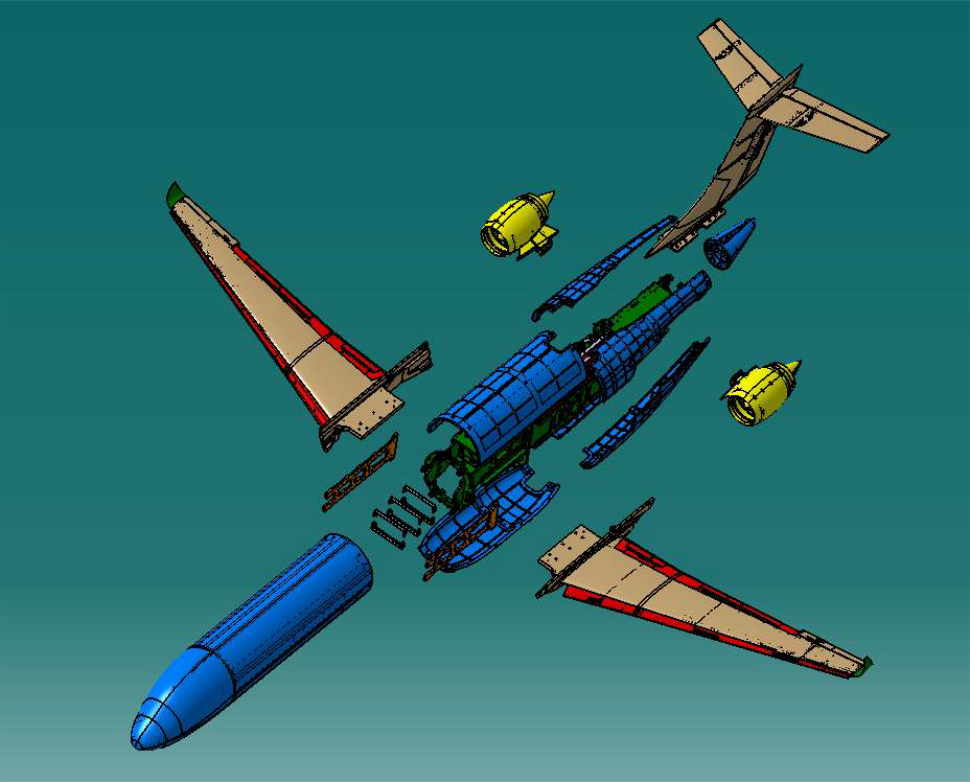
CAD windtunnel model.
The wind tunnel model, designed and engineered by IBK Innovation GmbH & Co. KG, was conceived to enable rapid configurational changes and minimize downtime during testing. Special design measures included modular actuation systems for variable high-lift configurations, a hinge-moment measurement setup, and aerodynamic adaptation for dorsal and ventral mounting options. To ensure test flexibility, provisions for acoustic compatibility with the parallel EASIER project were implemented, allowing for consistent integration of noise measurement instrumentation.
Due to the replacement of the initial manufacturing partner, the project underwent a redesign phase. IBK managed this transition by simplifying the actuation mechanisms while preserving the essential aerodynamic fidelity. The final model was delivered to RUAG in Q4 2016, and the wind tunnel campaign proceeded as planned.
Tests included both powered-engine simulation (via RUAG’s engine simulator) and unpowered aerodynamic characterizations. The results enabled a complete aerodynamic assessment of the Green Regional Aircraft configuration and provided key data for the evaluation of low-noise technologies developed within the GRA consortium.
The consortium comprised four European partners with complementary expertise:
IBK Innovation GmbH & Co. KG (Germany) – project coordination, wind tunnel model design, and data post-processing;
University of Bristol (UK) – loads calculation, data post-processing, and dynamic characterization;
RUAG Schweiz AG (Switzerland) – engine simulator development and wind tunnel testing;
EUROTECH (Italy) – model manufacturing and integration, replacing the original partner REVOIND.
Through ESICAPIA, a comprehensive aerodynamic database for a laminar, rear-engine regional aircraft configuration was created, contributing directly to the Clean Sky Green Regional Aircraft research objectives.
Contributions & Deliverables
- Wind tunnel model design with modular high-lift system (2014–2015)
- Coordination of manufacturing and integration activities (2015–2016)
- Data processing and aerodynamic characterization delivery (2016)
- Final report contribution and dissemination of GRA aerodynamic results (2016)
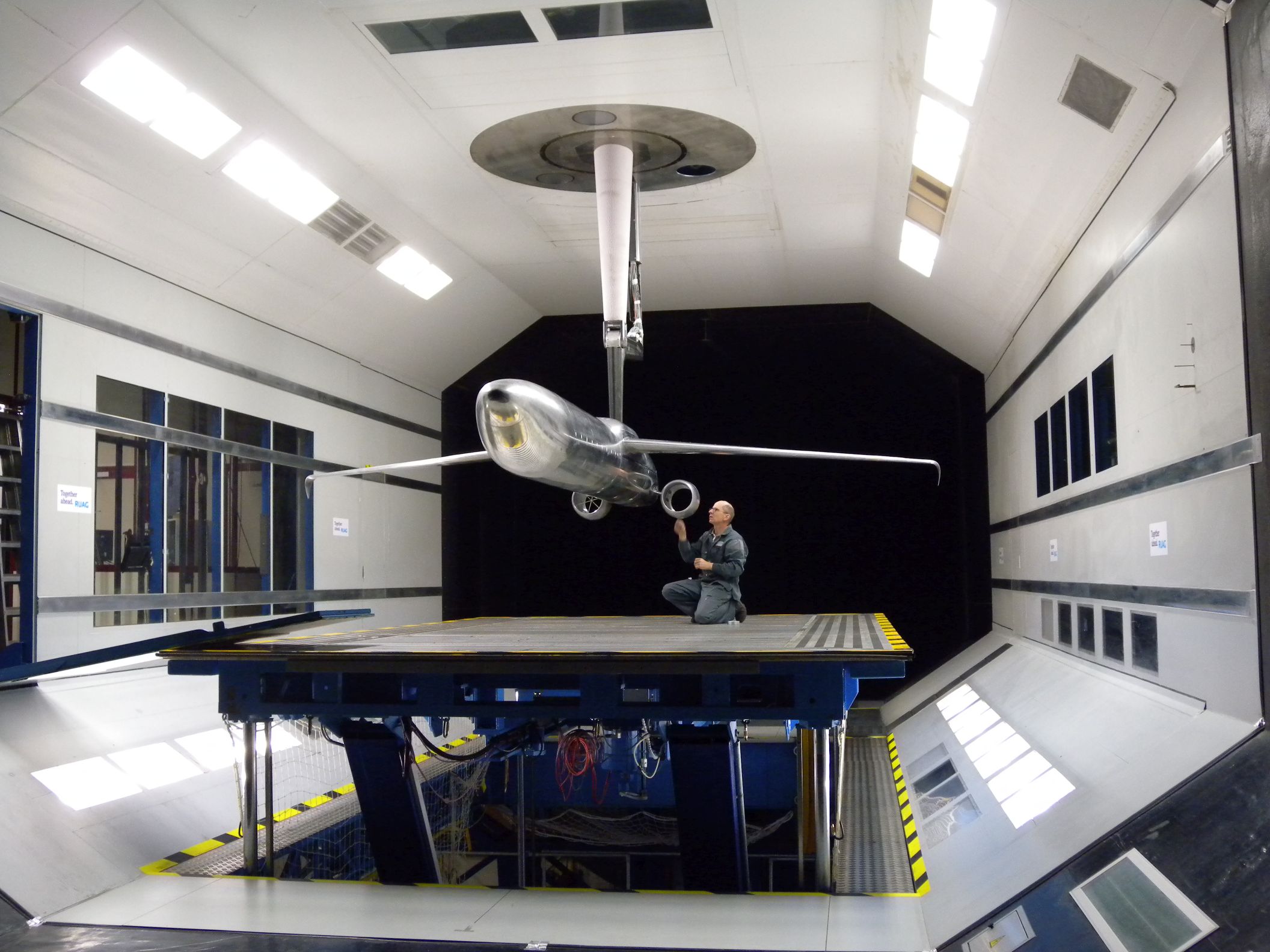
Windtunnel model in action.
Partners
IBK Innovation GmbH & Co. KG
Project management, model design, data post-processing
University of Bristol
Loads calculation and dynamic characterization
RUAG Schweiz AG
Engine simulator and wind tunnel testing
Methods, Tools & Facilities
Methods
Wind tunnel testing, aerodynamic loads measurement, hinge-moment characterization, powered configuration testing
Tools
CATIA V5, ANSYS, MATLAB, LabVIEW
Facilities
RUAG Large Wind Tunnel, Emmen (Switzerland)
Additional Information
Funding
- Funding body: European Union – Clean Sky Joint Technology Initiative (“Cooperation”)
- Grant number: 325954
- “This project has received funding from the European Union’s Seventh Framework Programme for research, technological development and demonstration under grant agreement No 325954.”
Duration
01/2013 – 12/2016 Phases: model design and manufacturing (2013–2015), test preparation and execution
at RUAG (2016).