



G-FLIGHTS
Within G-FLIGHTS, several systems for the alleviation of structural loads due to manoeuvres and gusts were developed, implemented and validated in flight tests. IBK led aeroelastic modeling and control system integration.
Project Overview
G-FLIGHTS (“Geregeltes Fliegen mit geschätzten Lasten”) focused on the development and validation of flight control systems for structural load alleviation under real flight conditions. The project was part of the German National Aeronautical Research Program (LuFo V.2) and aimed to advance the concept of load-aware flight control, where structural responses of an aircraft are directly incorporated into control logic for enhanced performance and safety.
Modern electronic flight control systems (EFCS) primarily assist pilots in maintaining stability and avoiding critical flight conditions. G-FLIGHTS extended this concept by actively mitigating aerodynamic and structural loads resulting from manoeuvres, gusts and turbulence. By integrating load estimation into control loops, the structural margins of wings and empennage can be used more efficiently, enabling lighter structures, improved handling qualities and enhanced passenger comfort.
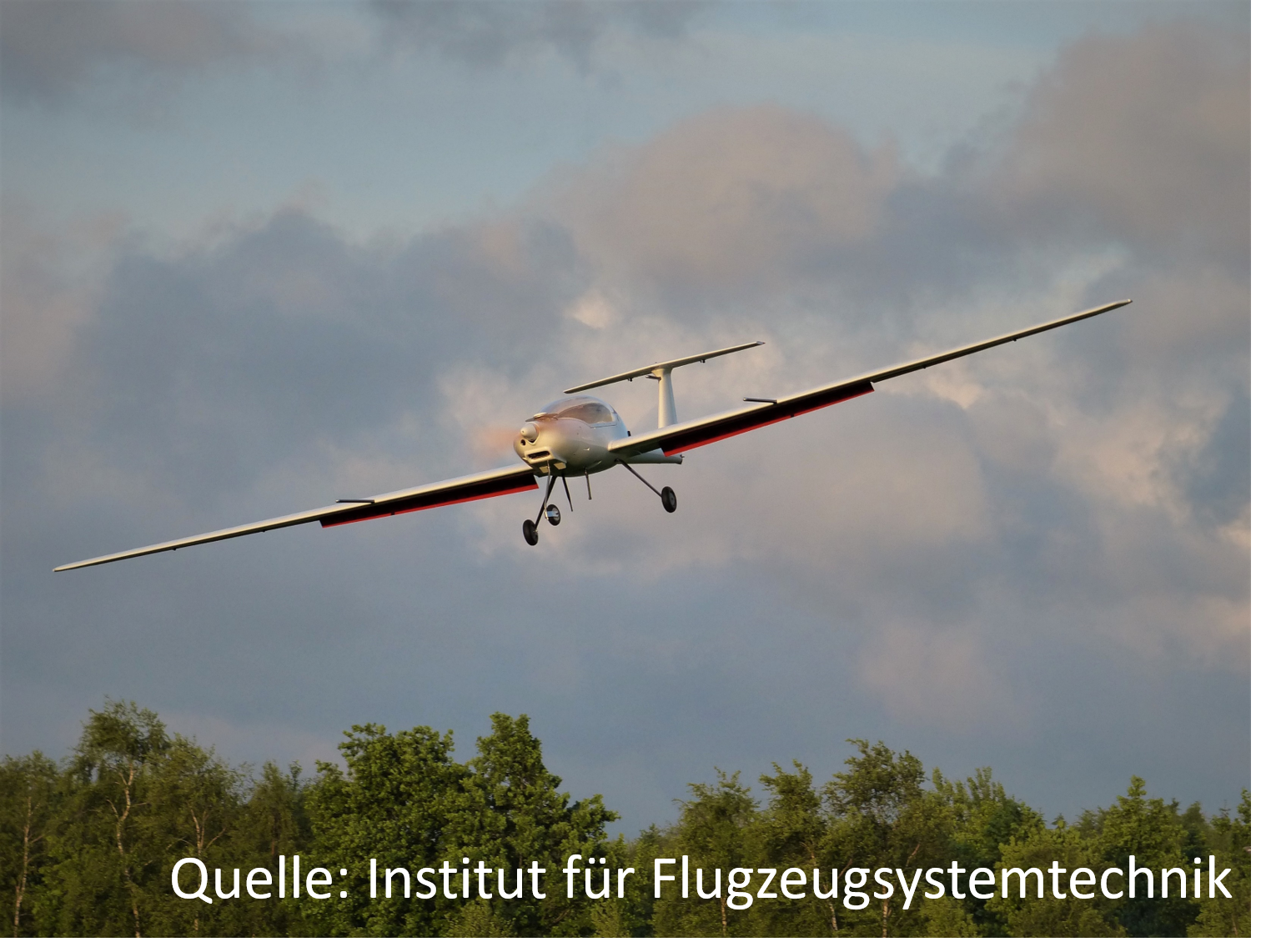
The project’s experimental platform was the HK36 “Super Dimona” research aircraft, operated by the Institute for Aircraft Systems Engineering (FST) at Hamburg University of Technology (TUHH). IBK Innovation GmbH & Co. KG developed a comprehensive aeroelastic model of the aircraft, combining theoretical aerodynamic and structural descriptions that were calibrated with ground vibration tests (GVT) and flight test measurements. This model served as the foundation for the design, simulation and tuning of novel control algorithms.
Two main load alleviation strategies were explored:
- Data-driven load estimation, where control actions are based on real-time estimates of the actual structural load parameter instead of indirect indicators like load factor.
- Model predictive control (MPC), where future control surface deflections are optimized in real time using a dynamic model of the aircraft to minimize structural loads while preserving handling qualities.
Both approaches were implemented on the HK36 testbed and verified through in-flight validation campaigns. The comparison of model-based predictions with flight data allowed quantitative assessment of load reduction efficiency and system robustness.
The project demonstrated that load estimation and model predictive control can be integrated into general aviation-scale aircraft and scaled for future industrial applications. The resulting methods enable significant potential for structural weight reduction, fatigue life extension and comfort improvement.
Through G-FLIGHTS, IBK Innovation strengthened its expertise in aeroelastic modeling, flight control integration and real-time testing, working in close collaboration with TUHH’s flight research group.
Scaled flight test platform G-Flights Di-mona
The project’s experimental platform was the HK36 “Super Dimona” research aircraft, operated by the Institute for Aircraft Systems Engineering (FST) at Hamburg University of Technology (TUHH). IBK Innovation GmbH & Co. KG developed a comprehensive aeroelastic model of the aircraft, combining theoretical aerodynamic and structural descriptions that were calibrated with ground vibration tests (GVT) and flight test measurements. This model served as the foundation for the design, simulation and tuning of novel control algorithms.
Two main load alleviation strategies were explored:
Data-driven load estimation, where control actions are based on real-time estimates of the actual structural load parameter instead of indirect indicators like load factor.
Model predictive control (MPC), where future control surface deflections are optimized in real time using a dynamic model of the aircraft to minimize structural loads while preserving handling qualities.
Both approaches were implemented on the HK36 testbed and verified through in-flight validation campaigns. The comparison of model-based predictions with flight data allowed quantitative assessment of load reduction efficiency and system robustness.
The project demonstrated that load estimation and model predictive control can be integrated into general aviation-scale aircraft and scaled for future industrial applications. The resulting methods enable significant potential for structural weight reduction, fatigue life extension and comfort improvement.
Through G-FLIGHTS, IBK Innovation strengthened its expertise in aeroelastic modeling, flight control integration and real-time testing, working in close collaboration with TUHH’s flight research group.
Contributions & Deliverables
- Development of a complete aeroelastic model of HK36 Super Dimona (2016–2017)
- Implementation of data-driven and model-based load estimation algorithms (2018)
- Flight validation of control systems and assessment of load alleviation efficiency (2019)
Partners
IBK Innovation GmbH & Co. KG
Aeroelastic modeling, system simulation, load estimation and control system validation
Hamburg University of Technology (TUHH), Institute for Aircraft Systems Engineering (FST)
Project coordination, flight testing, instrumentation and EFCS integration
Methods, Tools & Facilities
Methods
Aeroelastic modeling, system identification, model predictive control, real-time flight testing
Tools
MATLAB/Simulink, Dymola, Python, LabVIEW
Facilities
TUHH FST flight test platform HK36 Super Dimona, IBK simulation and test environment
Additional Information
Funding
- Funding body: National Aeronautical Research Program of Germany (LuFo V.2)
- “This project was funded within the framework of the German National Aeronautical Research Program (LuFo V.2).”
Duration
01/2016 – 09/2019
Phases: modeling and simulation (2016–2017), control system design and hardware integration (2017–
2018), flight testing and validation (2018–2019).